

Small-Batch PCB Assembly for Startups and Prototyping: How to Choose the Right PCB Assembly Manufacturer
For startups, hardware products usually require several validation rounds before market release. Schematics can confirm circuit logic. Simulation can reveal some risks. However, a real circuit board can expose assembly, thermal, connection, testing, and mechanical-fit issues. Small-batch PCB assembly is therefore an important part of prototype development.
Small-batch PCBA is not simply large-scale production with fewer boards. It connects engineering samples, functional validation, pilot production, and early market testing. The right PCB assembly manufacturer should do more than place components on a PCB. The supplier should also support file review, material confirmation, first-article validation, and issue closure. This article explains how startups can prepare a small-batch PCB assembly project and choose a suitable manufacturing partner.
1. Why Do Startups Need Small-Batch PCB Assembly?
1.1 Turn Design Assumptions into Real Hardware Feedback
Design files cannot reveal every manufacturing risk. Actual assembly helps teams review component spacing, connector stress, thermal paths, and test-point locations. The fit between the product enclosure and the PCB also needs physical verification. Some issues appear only during assembly and system integration.
Therefore, small-batch production supports a build-test-learn cycle. Teams can update the PCB, BOM, firmware, or mechanical design after testing the first boards. Each revision should have a clear record. This practice helps engineers separate test results from different product versions.
1.2 Which Development Stages Suit Small-Batch Assembly?
Prototype production usually focuses on assembly feasibility. Engineering samples focus more on basic function. Pilot production examines process repeatability. Early market validation also requires attention to batch records, packaging, and service feedback.
Each stage has a different objective. Production requirements also change by stage. Startups should not choose a supplier only by board quantity. They should confirm whether the PCB assembly manufacturer can support changes to files, materials, and test requirements.

1.3 Small-Batch PCBA Cannot Replace Full Product Validation
Small-batch assembly supports engineering validation. It does not automatically prove that a product is ready for mass production. Industrial control, automotive electronics, medical equipment, and smart hardware may require functional, environmental, lifetime, and reliability testing.
The test scope should match customer standards, product risk, and project stage. A manufacturer can support production and testing. The product team still owns final product validation.
2. Confirm Project Readiness Before Prototype PCB Assembly
2.1 Are the Production Files Ready for Manufacturing?
Before requesting a formal quotation, customers should prepare Gerber or ODB++ files, a complete BOM, placement data, and assembly drawings. The package should also state PCB material, board thickness, surface finish, quantity, and assembly sides. ICT, FCT, programming, conformal coating, or special packaging requirements should be stated in advance.
The BOM should include manufacturer part numbers, reference designators, package information, quantities, and brand requirements. Customers should also identify approved alternates and parts that must use a specified part number. Complete data helps the PCB assembly manufacturer confirm the sourcing scope and production requirements.
2.2 Do Component Packages Match the Process and Inspection Plan?
Fine-pitch components increase solder paste printing requirements. BGA, QFN, LGA, and CSP packages also create hidden solder joint inspection requirements. Connectors, relays, and large components may require through-hole or mixed assembly.
Engineers should confirm the stencil, placement, reflow, and inspection plan before production. The team should not wait until the first build to discover that a package cannot be assembled as planned. Critical components also require early review of pad design, thermal structures, and test methods.
2.3 Have the Project Requirements Become Clear Acceptance Criteria?
“Build according to the sample” is usually not a complete production requirement. Customers should also define appearance requirements, functional tests, critical components, batch traceability, and release conditions. Projects that require programming should include the applicable program version and test method.
When acceptance criteria remain unclear, the supplier cannot define the inspection scope accurately. Later disputes may occur because the factory and the customer use different acceptance judgments. Acceptance requirements should therefore be confirmed during quotation and engineering review.
3. The Small-Batch PCB Assembly Process: From File Review to First Article
3.1 Complete DFM and DFA Reviews Before Production
A DFM review focuses on whether the PCB suits manufacturing and assembly. Common checks include pad dimensions, component spacing, solder mask bridges, silkscreen positions, panelization, stencil openings, test points, and rework space.
A DFA review focuses on whether components can be assembled as planned. Engineers should check connector orientation, mechanical interference, assembly sequence, and manual handling space. The review should create a clear issue list. A simple “ready for production” statement does not show the actual manufacturing risks.
3.2 Keep the BOM, Gerber, and Placement Data Consistent
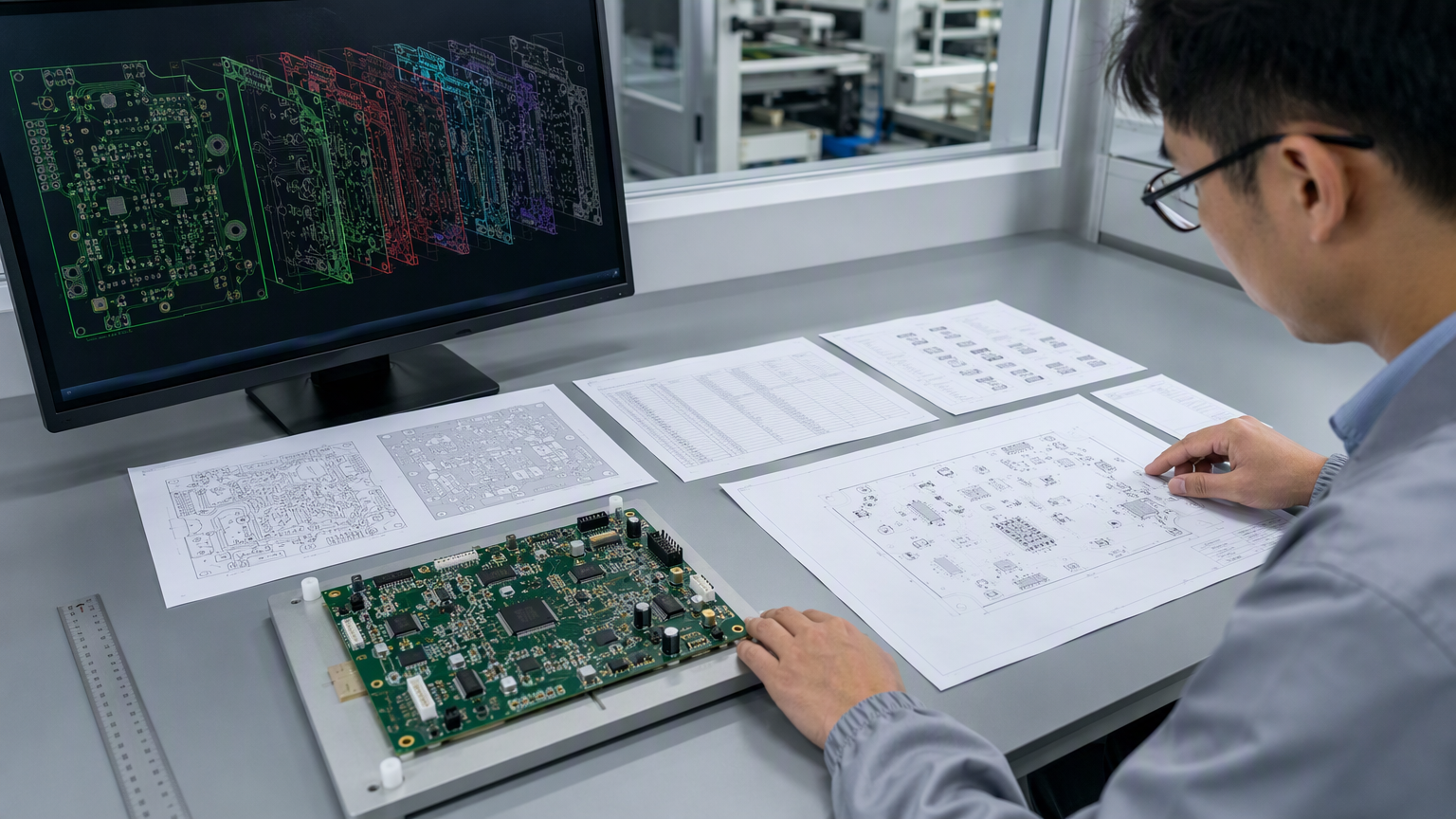
The BOM supports material verification and purchasing. Gerber files support PCB manufacturing data. Placement data supports pick-and-place programming. Assembly drawings can add polarity, orientation, and special assembly requirements.
These files must match the same product revision. Customers should update all related files after an engineering change. If the BOM is new but the placement file is old, the line may load wrong parts or miss components. Revision control is therefore a basic requirement for small-batch production.
3.3 Define Material Sourcing Responsibilities Early
Common sourcing risks include minimum order quantities, long-lead parts, end-of-life warnings, brand restrictions, and alternate approval. Some components also use reels, cut tape, tubes, or trays. The package format may affect kitting and machine loading.
Customers can choose turnkey, consigned, or hybrid sourcing. Each model requires clear rules for purchasing responsibility, arrival dates, lot control, packaging, attrition, and leftover materials. Low-cost stock does not always mean production-ready material.
3.4 Match the Stencil, Placement Program, and Reflow Profile
Stencil openings affect solder paste volume. The placement program affects component location and orientation. The reflow profile affects the thermal soldering process. These elements must match the PCB design and component structure.
Before production, the engineering team should confirm the stencil revision, feeder list, placement program, material revision, and reflow parameters. Small-batch production does not remove the need for this preparation. First-article production should not become the first file review.
3.5 Turn First-Article Inspection into Actionable Feedback
First-article inspection should involve more than checking whether the PCB surface looks neat. Engineers should verify component location, polarity, orientation, package type, critical solder joints, connectors, and test points. Functional testing should also confirm whether the board meets the project requirements.
When an issue appears, the team should record its location, type, possible cause, corrective action, and reinspection result. First-article data can then guide later small-batch production. It can also help the team separate design, material, placement-program, and soldering issues.
4. How Can Small-Batch Projects Control Cost?
4.1 Separate NRE Costs from Board-Level Assembly Costs
Small-batch projects often include stencil, programming, engineering review, fixture, first-article, test preparation, and changeover costs. These costs differ from board-level assembly charges. When the order quantity is small, fixed costs are spread across fewer boards.
Purchasing teams should therefore compare more than the assembly price per board. The quotation should state whether materials, stencils, testing, fixtures, packaging, and shipping are included. Actual cost depends on board size, BOM, quantity, process, and inspection requirements.
4.2 Material Quantity and Packaging Can Change the Real Cost
Small-batch sourcing is not based only on the price per component. Some parts require a full reel or tray. Others may use cut tape or another package format. Kitting, replenishment, and leftover handling can also affect total cost.
The BOM should state the usage per board and purchasing requirements. Customers should also define brand restrictions and alternate permissions. This information helps the PCB assembly manufacturer reduce assumptions during quotation.
4.3 Do Not Remove Inspection and Testing Only to Lower the Unit Price
Visible solder joints can often be evaluated with SPI and AOI. BGA, QFN, LGA, and CSP packages may require additional X-ray evaluation. Electrical testing, programming, and functional testing should match the product function.
The inspection plan should match product risk. Removing too much inspection may lower the visible quotation. It may also increase rework and validation risks. Startups should focus on total project cost instead of one processing line item.
4.4 Use Design Decisions to Reduce Unnecessary Manufacturing Complexity
Design teams can standardize suitable packages and reduce unnecessary material variety. They can also confirm panelization early. Test points, rework space, and connector orientation should be considered during design.
Design optimization cannot ignore product performance. Any alternate part, package change, or panelization change requires engineering review. A fixed savings percentage should not be promised without project data.
5. How Can Small-Batch PCBA Build a Quality Loop?
5.1 SPI Checks Solder Paste Before Placement
SPI can check solder paste position, area, height, and volume. It helps engineers identify offset, insufficient paste, excess paste, and missing print. Abnormal boards can be isolated before placement and reflow.
However, SPI cannot confirm whether components are placed correctly. It also cannot replace post-reflow solder joint inspection. SPI should therefore work with AOI, X-ray, and applicable electrical tests.
5.2 AOI Checks Components and Visible Solder Joints
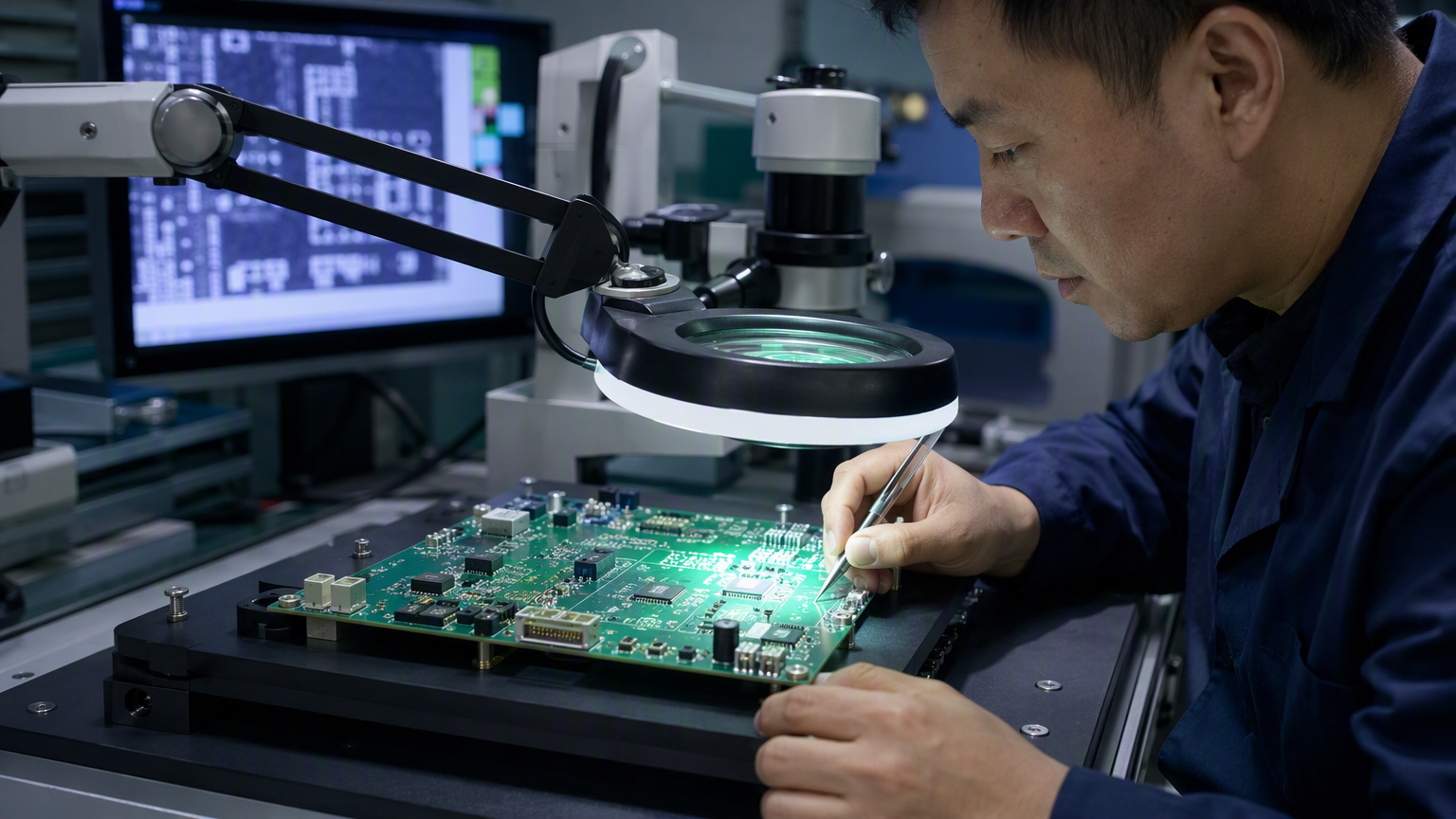
AOI can help identify missing components, wrong components, offset, polarity errors, and some visible solder joint defects. Reflective components, complex joints, and blocked areas may increase false calls or create inspection blind spots.
Engineers should review abnormal results. Defect images, locations, causes, and rework results should also be retained when applicable. These records help teams compare defect trends between batches.
5.3 X-Ray Evaluates Hidden Solder Joint Risks
X-ray inspection suits BGA, QFN, LGA, CSP, and bottom thermal pad structures. Engineers can use images to assess solder distribution, voids, bridging, and connection conditions.
Image judgment must still consider package structure, process requirements, and customer standards. Not every project needs the same X-ray coverage. The inspection plan should match component risk and product use.
5.4 Electrical Testing and Process Traceability Also Matter
Visual inspection cannot prove complete electrical function. Projects may require ICT, FCT, flying probe, programming, or other tests. Test results should link to the product revision and production batch.
Material lots, board numbers, inspection records, and rework results should also be retained when applicable. For industrial control, automotive, and medical projects, clear process records support later issue analysis.
6. How to Choose a PCB Assembly Manufacturer for a Startup Project?
6.1 Review Engineering Support, Not Only Equipment Names
The supplier should be able to review Gerber files, the BOM, placement data, and assembly drawings. The engineering team should also explain how it reports DFM issues, handles shortages and alternates, and confirms first-article issues.
An equipment list can provide a reference. It cannot replace project-level engineering judgment. The key question is whether the supplier can turn equipment capability into a process plan for the actual project.
6.2 Confirm Support for Different Project Stages
Prototype, engineering sample, pilot, and early production builds have different requirements. Project files may also change over time. A suitable PCB assembly manufacturer for startups should manage revisions, materials, test requirements, and change records.
The supplier should also define fixed costs, material scope, test responsibility, release conditions, and quotation boundaries. Do not judge the partnership only by one board-level price.
6.3 Check Quality Records and Communication Boundaries
Customers can ask whether the supplier provides first-article records, SPI data, AOI images, X-ray results, electrical test records, and rework information. The exact record scope should follow project requirements and mutual confirmation.
Both parties should also define responsibility for engineering changes, alternate approval, test judgment, and abnormal release. Clear communication boundaries reduce later disputes.
6.4 Evaluate the Sourcing Model and Total Coordination Cost
Turnkey sourcing suits teams that want fewer purchasing interfaces. Consigned sourcing suits customers that already control critical parts and supply channels. Hybrid sourcing suits projects that keep critical parts under customer control while the supplier sources standard components by BOM line.
No single sourcing model suits every startup. The final choice should consider BOM maturity, component availability, purchasing capacity, quality requirements, and traceability needs.
7. How Can a Small-Batch Prototype Move Toward Pilot and Mass Production?
7.1 Use First-Build Data to Plan the Next Build
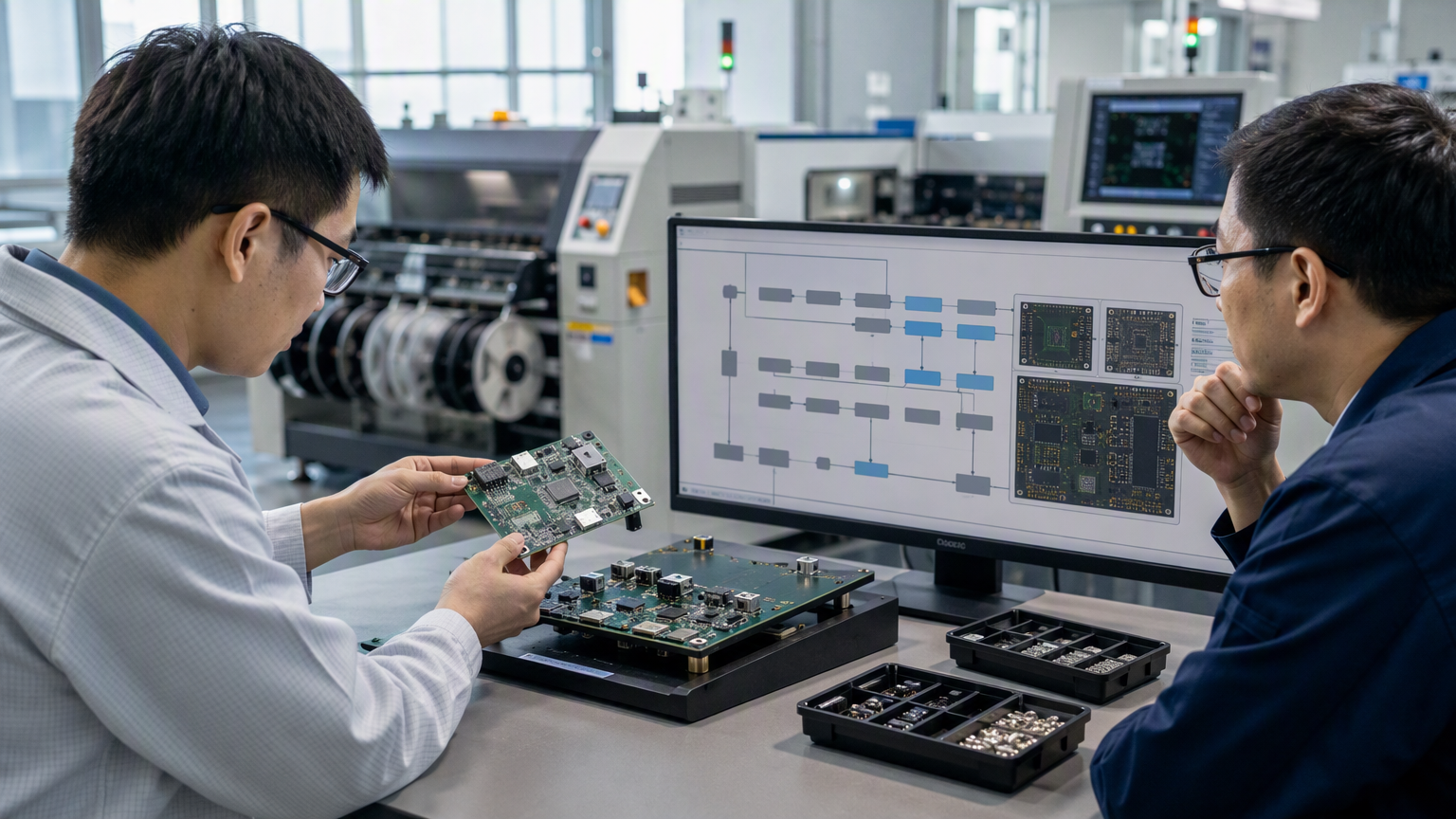
After a small-batch project, the team should review defect trends, material alternates, process parameters, test failures, rework causes, and customer feedback. When a revision is needed, the team should update the BOM, Gerber files, placement data, assembly drawings, test programs, and revision records together.
A prototype process setup may not suit stable mass production. Before the pilot build, the team should review material availability, panelization, test fixtures, inspection rules, packaging, and traceability. Industrial control, automotive, medical, and smart hardware projects may also need reliability or environmental validation based on their application.
If you are looking for a PCB assembly manufacturer, submit the Gerber or ODB++ files, complete BOM, placement data, assembly drawings, PCB specifications, target quantity, project stage, and test requirements. When you choose our PCBA services, the engineering team can evaluate DFM risks, material options, inspection scope, small-batch PCB assembly processes, and quotation boundaries based on your actual data. Prices, lead times, MOQs, and service scope should follow the project information and formal confirmation.
Conclusion: Small-Batch PCB Assembly Supports Product Decisions
The value of small-batch PCB assembly goes beyond producing a limited number of boards. It also gives startups real hardware feedback. Engineering files, material responsibility, DFM review, first-article inspection, SPI, AOI, X-ray, electrical testing, and revision traceability together determine whether the first boards can support the next development stage.
For this reason, choosing a PCB assembly manufacturer should involve more than comparing board-level processing prices. Engineering review, material management, inspection coverage, issue closure, and production transition must also match the project stage. Submitting Gerber files and a BOM helps the supplier evaluate the small-batch PCBA project and prepare a quotation based on real production conditions.




Leave A Comment